Biochar, a carbon-rich product derived from the pyrolysis of biomass, has been gaining attention in the agricultural sector due to its potential to improve soil health and increase crop productivity. This blog post explores the various benefits of biochar application in agricultural systems, focusing on its impact on soil physical and chemical properties, water use and fertilizer use, and soil biological activity.
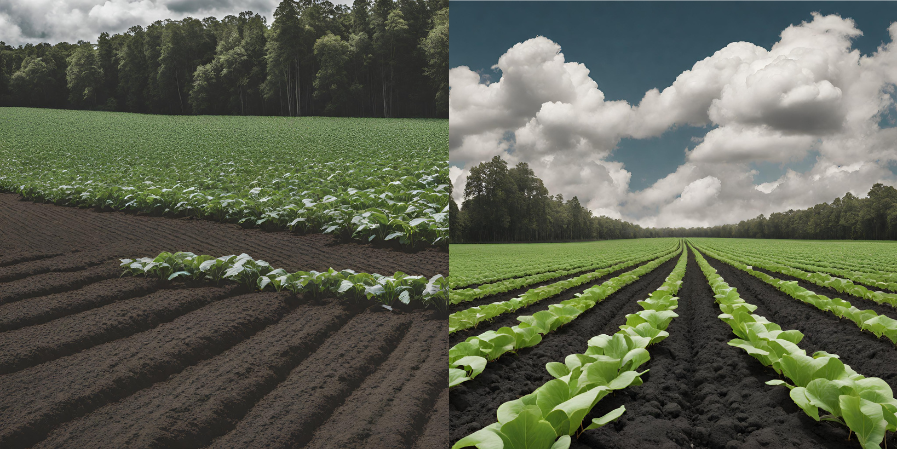
Soil Physical Properties
Biochar addition can decrease soil bulk density by between 3 and 42%, reduce compaction by over 10%, and improve porosity (the space between soil particles) by between 14 and 64%. These changes facilitate better air and water movement through the soil, promoting root development and enhancing plant growth. Additionally, biochar can increase water holding capacity, with studies reporting an average improvement of 15%, and saturated hydraulic conductivity by up to 88%, reducing irrigation requirements.
Soil Chemical Properties
Biochar application reduces soil acidity due to its alkalinity and buffering capacity, pushing the soil pH values of acidic soils closer to a neutral pH of 7. It also reduces excess salinity, as biochar adsorbs the salts, thus helping limit the effect of salt stress on crops. Biochar addition can increase cation exchange capacity (CEC) of some soils by up to 55%, thus limiting the leaching of these important nutrients and ensuring that fertilizer requirements are minimized.
Water and Fertilizer Use
Biochar application impacts water use on the farm in numerous ways, with impacts varying based on soil, biochar, and management factors. Studies indicate average overall water use efficiency improvements of 20%, with plant water use efficiency improvements in the region of 10% for industrial and cereal crops and in excess of 40% for leafy plants. Biochar acts as a form of slow-release fertilizer, reducing the need for frequent fertilizer applications and promoting more efficient nutrient use by plants.
Soil Biological Activity
Biochar provides carbon and other nutrients for soil microbial communities, as well as offering a suitable habitat for growth. Together, these factors result in increased microbial activity and biomass within soils, with studies showing an average 25% increase in microbial biomass carbon and 22% increase in microbial biomass nitrogen.
Crop Productivity
Biochar application has been shown to be beneficial for growing crops, with crop yields increasing by 101 to 4213% with biochar additions, with the greatest increases on low-nutrient soils. The impact of biochar on crop yield has been extensively studied worldwide, with positive results observed in various crops, including maize, wheat, and other grains.
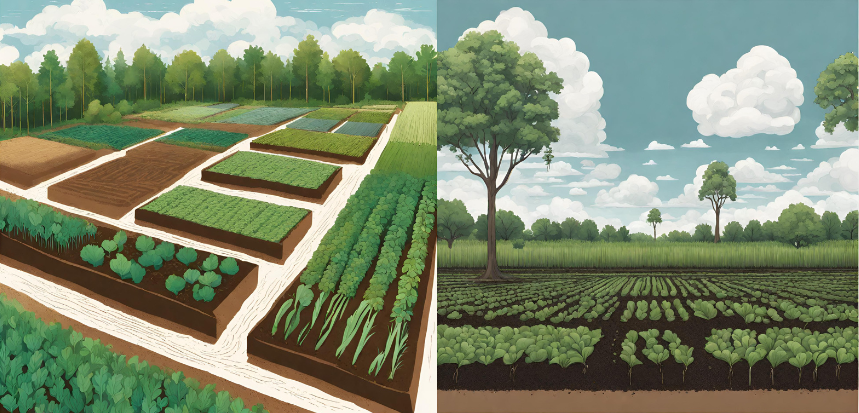
In conclusion, biochar offers a promising solution for improving soil health, increasing crop productivity, and promoting sustainable agricultural practices. By enhancing soil physical and chemical properties, reducing water and fertilizer use, and stimulating soil biological activity, biochar can contribute to more efficient and resilient agricultural systems.
References (Credit Bio Agri Group)
- Ye L, Camps-Arbestain M, Shen Q, Lehmann J, Singh B, Sabir M. (2020). Biochar effects on crop yields with and without fertilizer: A meta-analysis of field studies using separate controls. Soil Use and Management, 36(1), 2-18.
- Melo L, Carneiro J, Camps-Arbestein M. (2022). Biochar-based fertilizer effects on crop productivity: a meta-analysis. Plant and Soil, 472, 45-58.
- Farm Social. (n.d.). This is Biochar. Retrieved August 8, 2022, from https://www.farmsocial.org/biochar
- USDA. (2008). Soil Quality Indicators – Bulk Density. Retrieved from https://www.nrcs.usda.gov/Internet/FSE_DOCUMENTS/nrcs142p2_053256.pdf
- Vijay V, Shreedhar S, Adlak K, et al. (2021). Review of Large-Scale Biochar Field-Trials for Soil Amendment and the Observed Influences on Crop Yield Variations. Frontiers in Energy Research, 9, 710766.
- Blanco-Canqui H. (2017). Biochar and Soil Physical Properties. Soil Science Society of America Journal, 81(4), 687-711.
- Srivastava AK, Agegnehu G, Srivastava AK, Bird MI. (2017). The role of biochar and biochar-compost in improving soil quality and crop performance: A review. Applied Soil Ecology, 119, 156-170.
- USDA. (2008). Soil Quality Indicators – Available Water Capacity. Retrieved from https://www.nrcs.usda.gov/Internet/FSE_DOCUMENTS/nrcs142p2_053288.pdf
- USDA. (n.d.). Saturated Hydraulic Conductivity: Water Movement Concepts and Class History. Retrieved from
- USDA. (2008). Soil Quality Kit – Guides for Educators: Soil Phosphorous. Retrieved from https://www.nrcs.usda.gov/Internet/FSE_DOCUMENTS/nrcs142p2_053254.pdf
- Jauron R. (2002). The Meaning and Importance of Soil PH. Retrieved from https://hortnews.extension.iastate.edu/2002/5-24-2002/soilph.html
- Soil Quality. (2022). Fact Sheets Cations and Cation Exchange Capacity. Retrieved from https://www.soilquality.org.au/factsheets/cation-exchange-capacity
- Joseph S, Cowie AL, Van Zwieten L, et al. (2021). How biochar works, and when it doesn’t: A review of mechanisms controlling soil and plant responses to biochar. Global Change Biology Bioenergy, 13(11), 1731-1764.
- USDA. (1996). Soil Quality Indicators: Organic Matter. Retrieved from https://www.nrcs.usda.gov/Internet/FSE_DOCUMENTS/nrcs142p2_053150.pdf
- Gao Y, Shao G, Lu J, Zhang K, Wu S, Wang Z. (2020). Effects of biochar application on crop water use efficiency depend on experimental conditions: A meta-analysis. Field Crops Research, 249, 107763.
- Ding Y, Liu Y, Liu S, et al. (2016). Biochar to improve soil fertility. A review. Agriculture and Sustainable Development, 36(2), 1-13.
- Allohverdi T, Mohanty A, Roy P, Misra M. (2021). A Review on Current Status of Biochar Uses in Agriculture. Molecules, 26, 5584.
- USDA. (2004). Soil Biology and Land Management. Retrieved from https://www.nrcs.usda.gov/Internet/FSE_DOCUMENTS/nrcs142p2_052489.pdf
- Jaiswal AK, Alkan N, Elad Y, et al. (2020). Molecular insights into biochar-mediated plant growth promotion and systemic resistance in tomato against Fusarium crown and root rot disease. Scientific Reports, 10(1), 1-15.
- Thomas S, Gale N. (2015). Biochar and forest restoration: a review and meta-analysis of tree growth responses. New Forests, 46, 931-946.
- Mensah AK, Frimpong KA. (2018). Biochar and/or Compost Applications Improve Soil Properties, Growth, and Yield of Maize Grown in Acidic Rainforest and Coastal Savannah Soils in Ghana. International Journal of Agriculture, 2018, 1-12.
- Laufer J, Tomlinson T. (2013). Biochar Field Studies: An IBI Research Summary. Retrieved from https://www.biochar-international.org/sites/default/files/IBI_Biochar_Field_Studies_Summary_2013.pdf
- Tirgarsoltani M, Bahrami H, Mokhtassi-Bidgoli A, Zarebanadkouki M. (2021). The potential impact of biochar: Soil hydraulics and responses of maize under soil drying conditions. Soil and Tillage Research, 206, 105091.
Citations:
[1] https://ppl-ai-file-upload.s3.amazonaws.com/web/direct-files/14379772/075e67a0-38ea-464a-8e24-81332e708f4e/Biochar – Sustainable Agricultural.pdf
[2] https://ppl-ai-file-upload.s3.amazonaws.com/web/direct-files/14379772/b19201d5-2274-494e-a6df-5170a1477497/Bio Agri Group – Brochure March 2024.pdf
[3] https://ppl-ai-file-upload.s3.amazonaws.com/web/direct-files/14379772/4e851296-0039-4310-922c-ed5c07d1551c/Woody_Feedstocks_Management_and_Regional.pdf

 BKI
BKI 